
Wolof Interpreters and Translators: A Quick Guide

As the Wolof people increasingly migrate to the United States for safety, economic opportunities, and a better quality of life, language access is one of their biggest obstacles. This is where Wolof interpreters and translators step in and help migrants integrate safely into their new surroundings.
For the Wolof, whose cultural and linguistic heritage has stood the test of time, language services play a major role in bridging the gap between their traditional ways of life and the challenges of modern migration.
This blog explores the Wolof language, why the Wolof are migrating, and the help interpreters can provide as they settle in the United States.

Who speaks Wolof?
Wolof is spoken across the Senegambian region of West Africa, primarily in Senegal, The Gambia, and parts of Mauritania. Most speakers belong to the Wolof community, and it is also used in other communities as a lingua franca for trade, education, and social life.
Estimates often place the total number of speakers between 10 and 12 million, when both native and second-language speakers are included. In Senegal, Wolof speakers form the largest ethnic group. It is sometimes spelled as Wollof or Woloff.
Wolof belongs to the Senegambian branch of the Niger-Congo family. It has several regional variants. Dakar Wolof has strong multilingual influences and is widely used in national media. The Baol and Cayor variants are spoken in the central and northern regions. Jolof and Walo variants are used farther north. Gambian Wolof features some English vocabulary and differs slightly in sound and expression.
Early Wolof history is hard to trace, but communities have lived in the region for many centuries. The Jolof Empire, a political union formed by Wolof rulers that brought several kingdoms under one authority, once ruled much of the land that is now Senegal. When the empire dissolved, these kingdoms formed their own states and continued to control local lands and resources until France began its colonial rule in the 19th century.

Why are the Wolof migrating?
Wolof communities experience the effects of wider West African conditions that push people to relocate within the region or overseas. Changes in climate and struggling rural economies often guide these decisions, especially when local conditions no longer support long-term stability.
Many Wolof communities farm or herd livestock, activities that depend on reliable land conditions and seasonal rains. In northern Senegal, unpredictable rainfall and soil degradation have reduced the sustainability of pastoral work. As water points dry out and grazing areas shrink, many herders have had to adjust their routes or travel to new locations. Similar pressures are affecting small-scale farmers, who struggle with poor crop yields and rising unemployment. When subsistence farming becomes unsustainable, young adults in particular may look for work in the capital or abroad.
In Saint Louis, coastal floods in 2015 and 2016 displaced approximately 1,000 fisherfolk, who were then relocated to a site with few basic services and uncertain land rights. Many families have lived there for years with little help from the government for relocation or safer housing. Under conditions such as these, families might decide to seek stability in cities where services and work may be easier to find, or abroad, where higher wages could allow them to send money back to support their relatives.

The Roles And Importance Of Wolof Interpreters
Wolof interpreters help migrants to express themselves and understand the information they are given, allowing them to better advocate for themselves and make more informed decisions.
Interpreters act as trusted guides for Wolof migrants, guiding them through the complex U.S. immigration system and helping them get access to medical, legal, and social services. In settings like doctor's appointments, immigration proceedings, and court hearings, qualified Wolof interpreters are indispensable.
Besides providing language assistance, interpreters are also integral to intercultural communication. Having an interpreter who understands both American and Wolof cultures can help make communication smoother and less stressful for both sides.
Although millions speak Wolof, professional, certified interpretation for legal, medical, or official contexts is often difficult to obtain. Advanced translation programs are rare, as are formal interpreter training and certification. Most Wolof communication takes place orally, and written materials in Wolof are not widely available. Its limited digital and written resources, as well as its small number of trained interpreters, make it a lower-resource language.
This language disparity restricts Wolof speakers' access to healthcare, legal aid, and social services. Without language services, they are at risk of misdiagnoses, unfair asylum decisions, and unjust deportations. Wolof speakers need access to qualified interpreters to have a clear understanding of their circumstances and exercise their fundamental right to language access in the U.S.
Work With A Wolof Interpreter from Maya Bridge
We offer language services for Wolof and all of its variants. Our Wolof-to-English interpretation services are trusted by government agencies, healthcare providers, and courts across the country. As a small, niche agency specializing in Indigenous languages, we are uniquely equipped to deliver on-demand Wolof interpretation, 24 hours a day.
We offer:
Video Remote Wolof Interpretation
Over-the-phone Wolof Interpretation
In-person Wolof Interpretation
Court-certified Wolof Interpretation
Medical-certified Wolof Interpretation
Wolof Translation
Wolof Voiceover and Subtitles
Learn more about our language services here.
Maya Bridge - A Leading Advocate For Indigenous and Lower-resource Language Access In The U.S.
At Maya Bridge Language Services, we’re a mission-driven interpretation agency offering 24/7 on-demand services. We proudly provide interpretation in over 230 languages, including more than 145 Indigenous and low-diffusion languages from Latin America, Africa, Asia, the Pacific Islands, and Native American communities.
Since 2021, we have worked diligently to mobilize, train, and evaluate a network of hundreds of interpreters both in the U.S. and throughout the world. Our growing network of trained interpreters ensures that Indigenous language speakers are heard and understood in critical moments, from healthcare to legal settings and access to government services.
Contact us to schedule a meeting or call us anytime, day or night, at (801) 753-8568.
About the Author
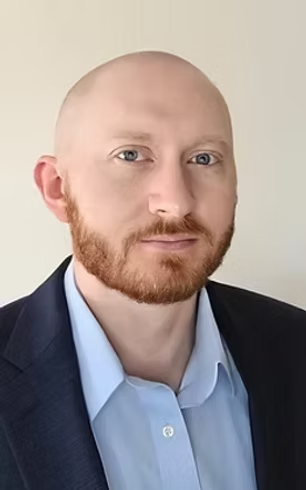
Jace Norton is a Q'eqchi' interpreter and linguist with an extensive background in the Q'eqchi' language. Norton lived and worked among the Q'eqchi' people from 2010 to 2012, created a language learning guide for Q'eqchi' in 2014, and worked in Q'eqchi' translation and interpretation from 2017 to 2021. In 2021, Norton founded Maya Bridge Language Services and is now a leading advocate for Mayan language access in the US.

Comments