
Kpelle Interpreters and Translators: A Quick Guide
As the Kpelle people increasingly migrate to the United States for safety, economic opportunities, and a better quality of life, language access is one of their biggest obstacles. This is where Kpelle interpreters and translators step in and help migrants integrate safely into their new surroundings.
For the Kpelle, whose cultural and linguistic heritage has stood the test of time, language services play a major role in bridging the gap between their traditional ways of life and the challenges of modern migration.
This blog explores the Kpelle language, why the Kpelle are migrating, and the help interpreters can provide as they settle in the United States.

Who speaks Kpelle?
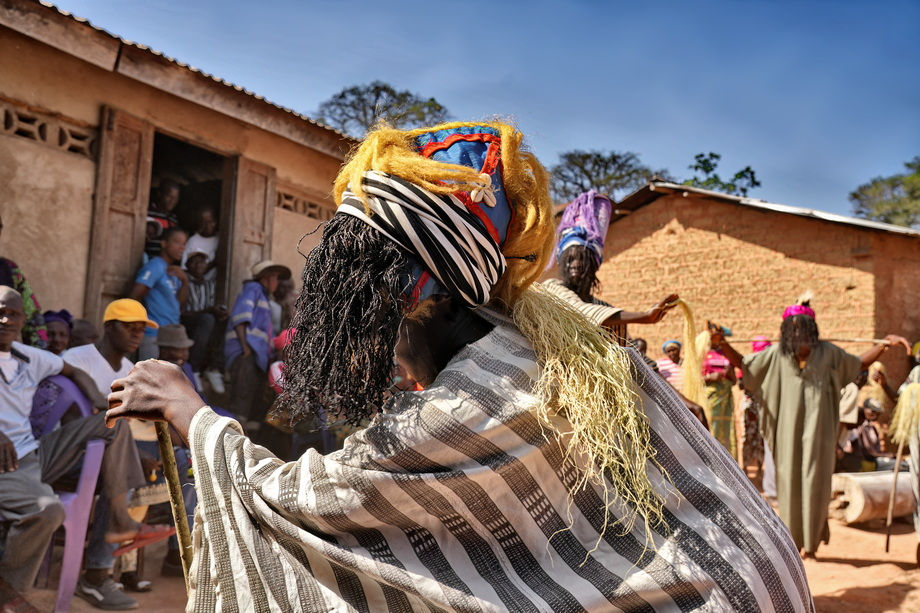
Kpelle is spoken by the Kpelle people, the largest Indigenous community in Liberia. Most speakers live in central Liberia, and there are also smaller communities in Guinea and Côte d’Ivoire. An estimated one million people speak it across these three countries. French-language sources sometimes spell it as "Guerze," "Kpellé," or "Guerzé."
Kpelle belongs to the Mande branch of the Niger-Congo language family, one of the largest language families in sub-Saharan Africa. Within Kpelle, there are two major variants: Liberian Kpelle and Guinean Kpelle. While closely related, each one differs slightly in pronunciation and vocabulary.
The Kpelle were historically located in the savannahs of western Sudan, near present-day Mali, during the sixteenth century. Following internal conflicts in the region, they migrated southwest, settling eventually in present-day Liberia and Guinea.
The Kpelle people are traditionally rice farmers. Growing rice is not just a way to earn a living; it is part of who they are and how their communities work together. Farming connects families, traditions, and everyday life. Local leaders, known as paramount chiefs, help settle disputes and keep order in their communities. They also play an important role in linking traditional leadership with the national government.

Why are the Kpelle migrating?
Liberia’s eight-year civil war, from 1989 to 1997, left lasting effects. Nearly 200,000 people were killed, and about 175,000 fled their homes or sought refuge abroad.
Although the war ended, its impact persists. Population movement, fragile institutions, and unresolved land disputes continue to spark violence and tension. Cross-border migration is common, especially when farmland or safety conditions deteriorate.
Rural communities depend on rain-fed agriculture, and unpredictable rainfall has made crop yields unreliable. The resulting soil degradation, erosion, and climate shifts have made it unsustainable to continue living in these areas and have compelled families to move. The lack of economic opportunity also plays a critical role. High unemployment and few vocational options push many Kpelle youth to leave.
With a Human Development Index of 0.480 and more than half the population living below the poverty line, over 2.3 million Liberians struggle to meet basic needs. Years of conflict and health crises such as Ebola and COVID-19 have also weakened Liberia’s economy, damaged its infrastructure, and hindered foreign investment.
The Roles And Importance Of Kpelle Interpreters
Kpelle interpreters help migrants to express themselves and understand the information they are given, allowing them to better advocate for themselves and make more informed decisions.
Interpreters act as trusted guides for Kpelle migrants, guiding them through the complex U.S. immigration system and helping them get access to medical, legal, and social services. In settings like doctor's appointments, immigration proceedings, and court hearings, qualified Kpelle interpreters are indispensable.
Besides providing language assistance, interpreters are also integral to intercultural communication. Having an interpreter who understands both American and Kpelle cultures can help make communication smoother and less stressful for both sides.
Kpelle receives little attention in linguistic and technological research. Considered a low-resource language, it has few written materials, standardized spellings, or specialized glossaries. For professional interpretation, these gaps matter. Without resources or institutional programs, fewer individuals can qualify as professional interpreters. Consequently, although there are sizable diaspora communities, there aren't many formally qualified interpreters.
This language disparity restricts Kpelle speakers' access to healthcare, legal aid, and social services. Without language services, they are at risk of misdiagnoses, unfair asylum decisions, and unjust deportations. Kpelle speakers need access to qualified interpreters to have a clear understanding of their circumstances and exercise their fundamental right to language access in the U.S.
Work With A Kpelle Interpreter from Maya Bridge
We offer language services for Kpelle and all of its variants. Our Kpelle-to-English interpretation services are trusted by government agencies, healthcare providers, and courts across the country. As a small, niche agency specializing in Indigenous languages, we are uniquely equipped to deliver on-demand Kpelle interpretation, 24 hours a day.
We offer:
Video Remote Kpelle Interpretation
Over-the-phone Kpelle Interpretation
In-person Kpelle Interpretation
Court-certified Kpelle Interpretation
Medical-certified Kpelle Interpretation
Kpelle Translation
Kpelle Voiceover and Subtitles
Learn more about our language services here.
Maya Bridge - A Leading Advocate For Indigenous and Lower-resource Language Access In The U.S.
At Maya Bridge Language Services, we’re a mission-driven interpretation agency offering 24/7 on-demand services. We proudly provide interpretation in over 230 languages, including more than 145 Indigenous and low-diffusion languages from Latin America, Africa, Asia, the Pacific Islands, and Native American communities.
Since 2021, we have worked diligently to mobilize, train, and evaluate a network of hundreds of interpreters both in the U.S. and throughout the world. Our growing network of trained interpreters ensures that Indigenous language speakers are heard and understood in critical moments, from healthcare to legal settings and access to government services.
Contact us to schedule a meeting or call us anytime, day or night, at (801) 753-8568.

About the Author
Jace Norton is a Q'eqchi' interpreter and linguist with an extensive background in the Q'eqchi' language. Norton lived and worked among the Q'eqchi' people from 2010 to 2012, created a language learning guide for Q'eqchi' in 2014, and worked in Q'eqchi' translation and interpretation from 2017 to 2021. In 2021, Norton founded Maya Bridge Language Services and is now a leading advocate for Mayan language access in the US.


Comments